01
Generate
The generator supplies controlled high-frequency energy to the ultrasonic stack.
Category overview
The ultrasonic stack converts electrical energy into controlled mechanical vibration and transfers that vibration to the application tool.
Stable operation depends on matching the transducer, booster, sonotrode, fixture and generator as one complete oscillation system.
System architecture
Stable ultrasonic operation depends on the complete energy path from the generator to the supported workpiece.
The generator supplies controlled high-frequency energy to the ultrasonic stack.
The transducer converts electrical energy into longitudinal mechanical vibration.
The booster adjusts vibration amplitude and provides the mounting point for the ultrasonic stack.
The sonotrode delivers vibration into the product while the fixture supports the workpiece.
Ultrasonic stack
Each component performs a specific role in generating, modifying and delivering ultrasonic vibration to the workpiece.
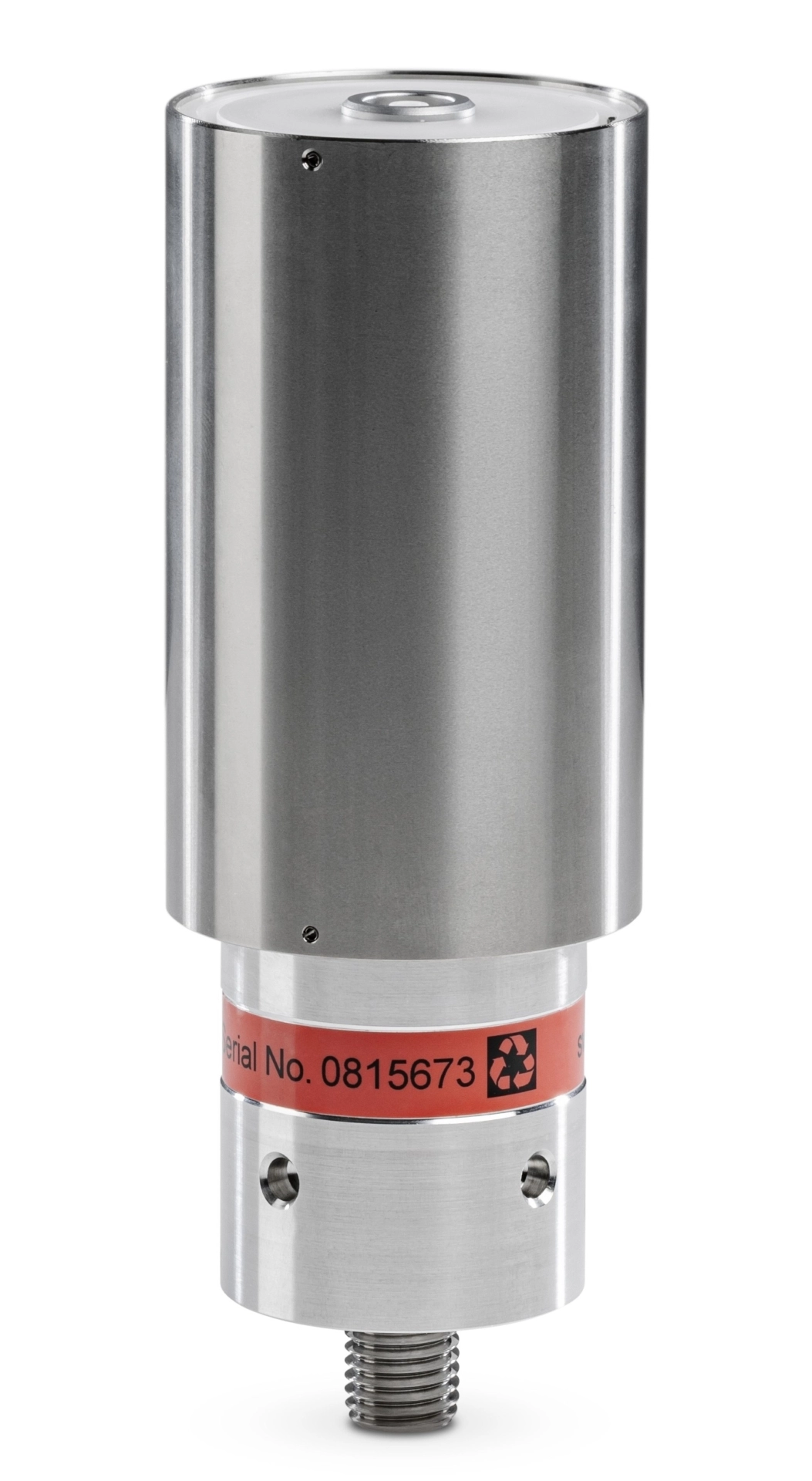
The transducer converts high-frequency electrical energy from the generator into longitudinal mechanical vibration. Frequency, cooling and housing protection must match the application and operating environment.
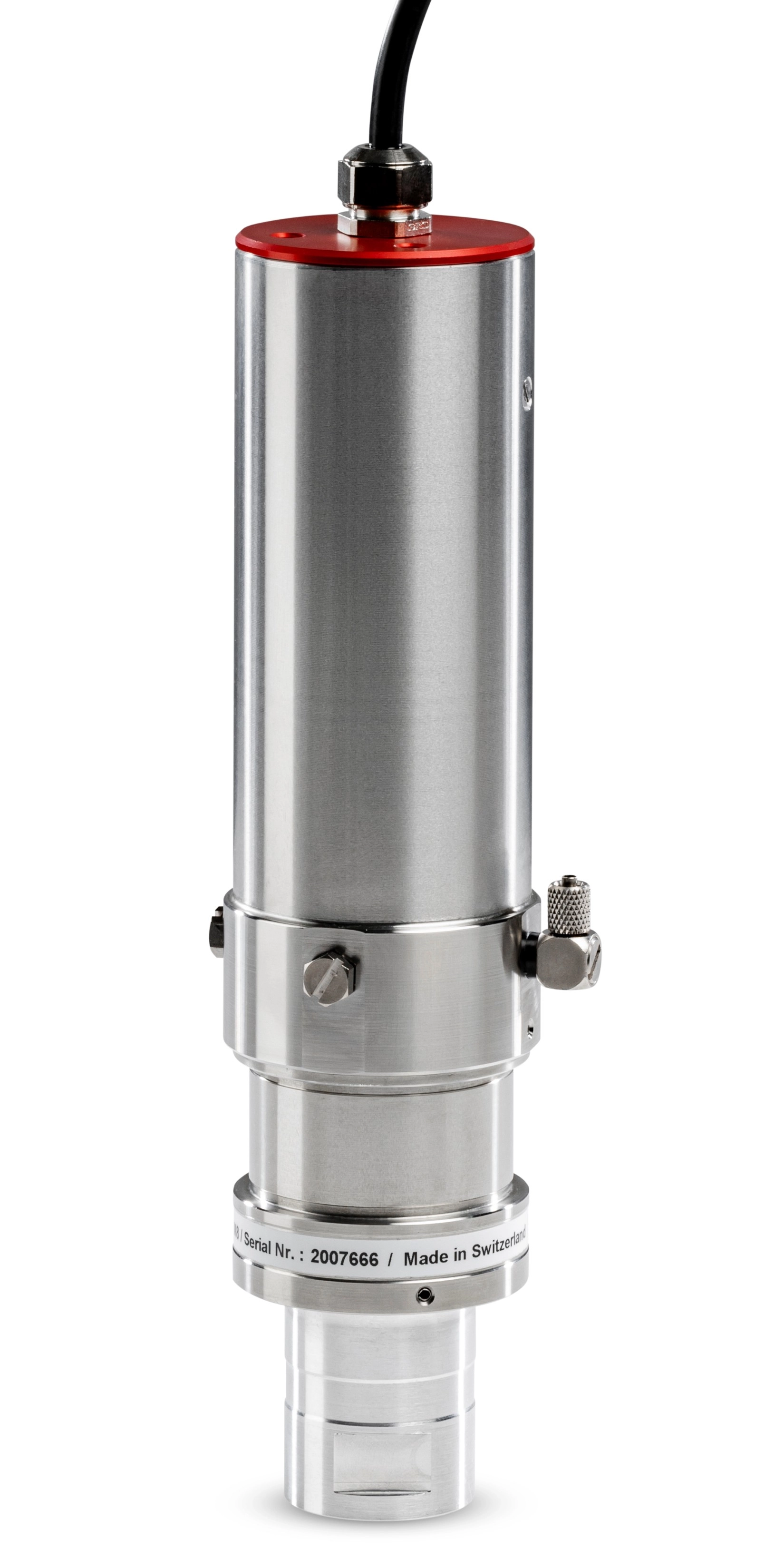
A combined transducer and booster arrangement reduces installation length where machine space is limited. The final ratio and mounting method must still be matched to the tooling and process requirement.
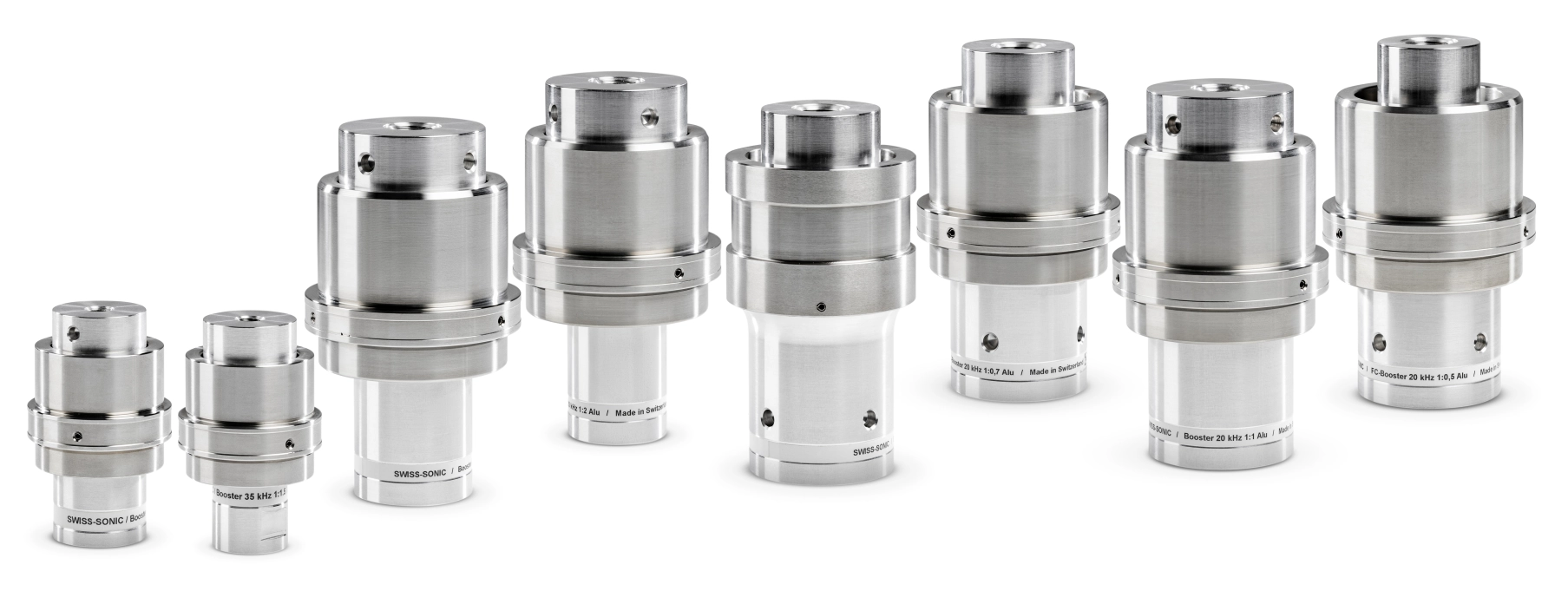
The booster modifies vibration amplitude and provides a mechanical mounting point within the ultrasonic stack. Ratio, material and stress level must be selected together with the transducer and sonotrode.
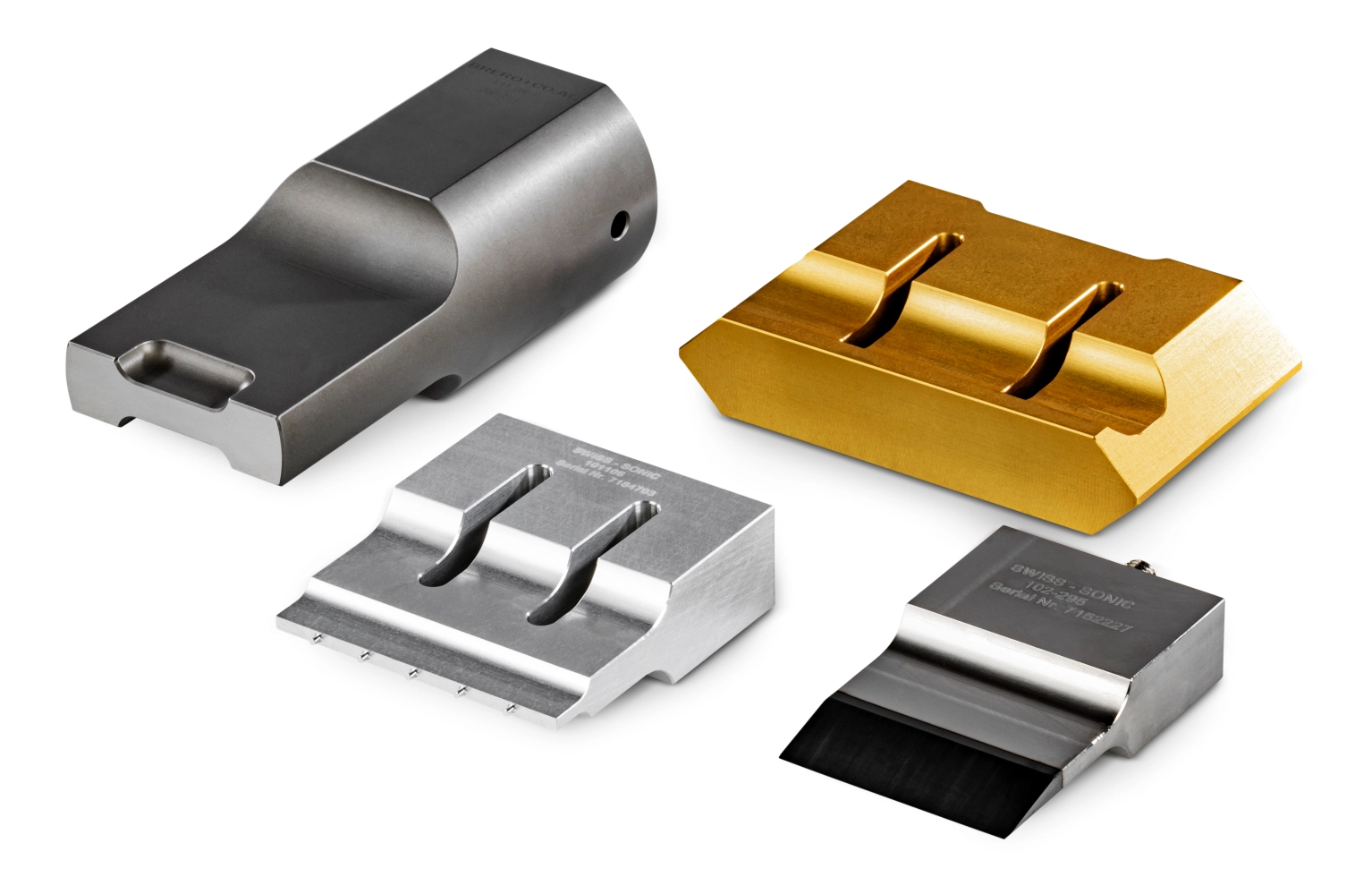
The sonotrode transfers ultrasonic vibration into the product, while the fixture supports and positions the workpiece. Geometry, contact area, material and surface treatment are developed around the actual application.
Engineering considerations
Individual parts cannot be selected reliably without considering the complete resonant assembly.
The transducer, booster and sonotrode must operate within the same designed frequency range as one resonant assembly.
Higher amplitude is not automatically better. The selected ratio, material and tooling geometry must remain within an acceptable mechanical stress range.
Sonotrode geometry, fixture support and component material must be developed around the part, contact area, wear conditions and duty cycle.
FAQ
Practical questions about replacement components, compatibility and application tooling.
ENGINEERING SUPPORT
Let us review how the transducer, booster, sonotrode, fixture and generator should work together as one resonant system.
Discuss an Ultrasonic Application