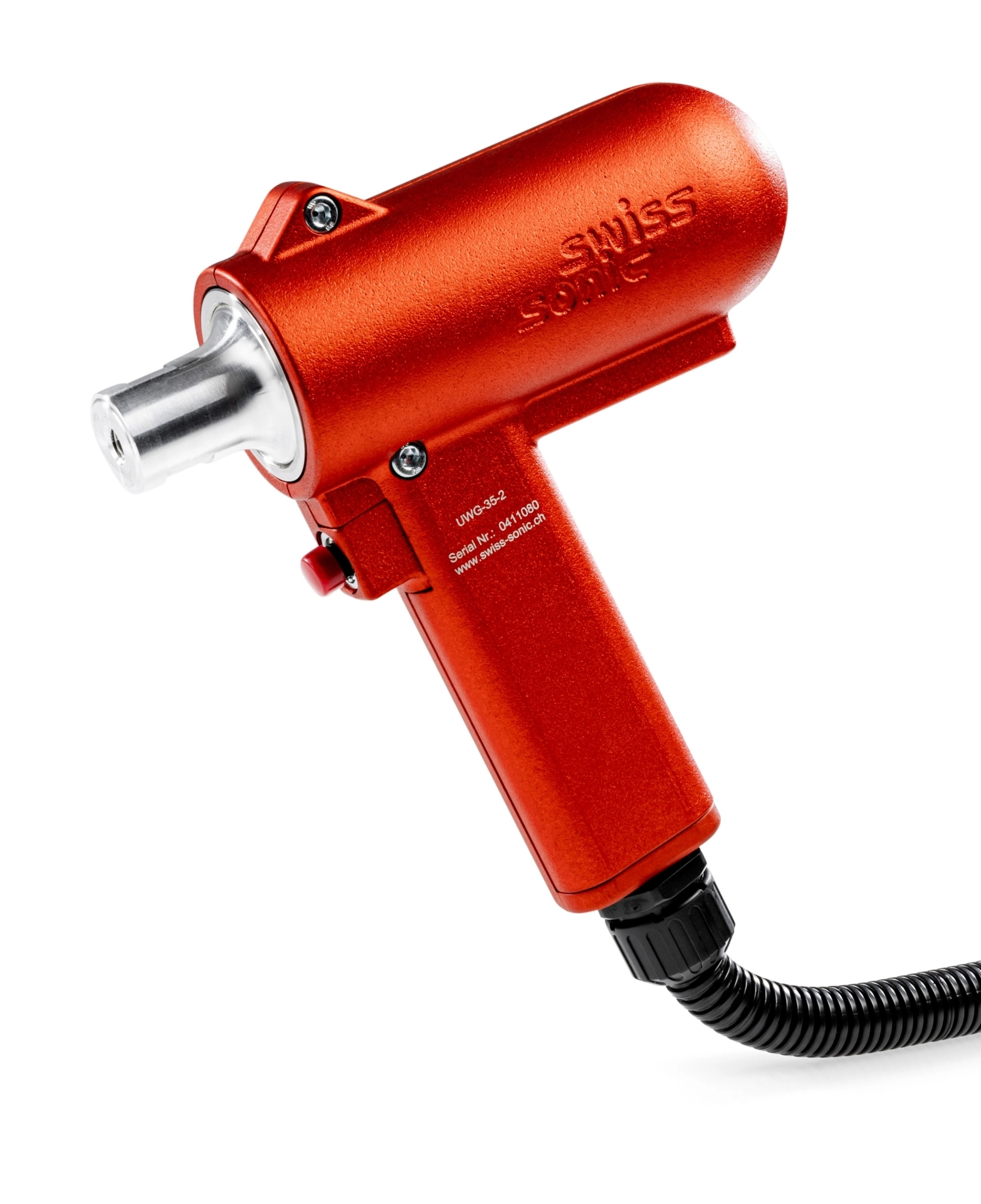
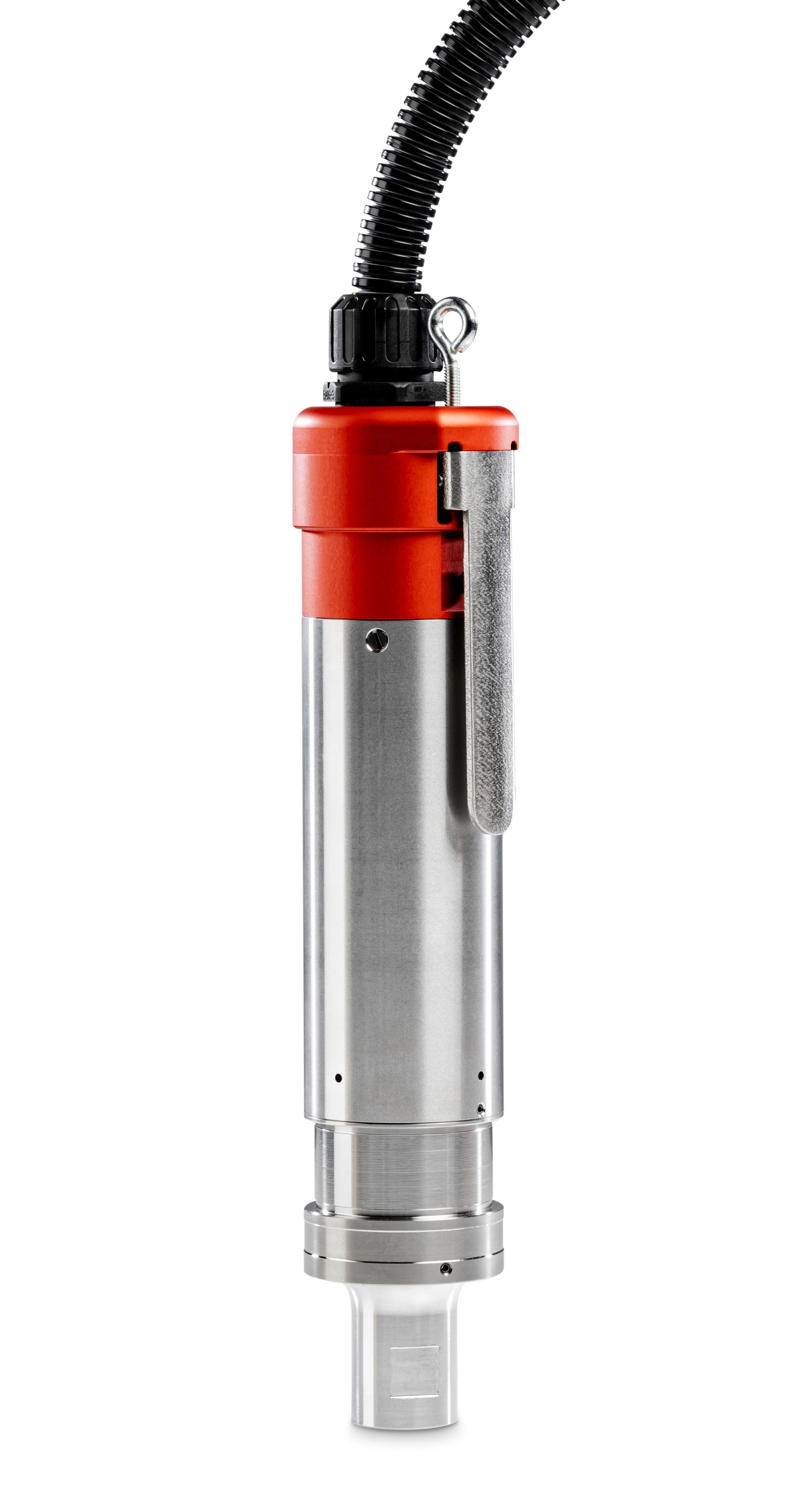
Ultrasonic Cutting Tool
A guided portable tool for cutting and edge-sealing thermoplastic textiles, films and nonwoven materials in one operation.
- Applications: textile, film and nonwoven cutting
- Function: simultaneous cutting and edge sealing
Category overview
Hand-held ultrasonic tools provide mobility for cutting, spot welding, riveting, repair and flexible production when a fixed press or dedicated workstation is impractical.
They are especially useful for large components, limited-access areas, short production runs and applications that require the operator or robot to bring the ultrasonic tool to the product.
Application fit
A portable tool is not simply a smaller press. It is selected when access, mobility or production flexibility matters more than fully automated vertical motion. Ideal for repair, low-volume production, prototype work and applications where a fixed press is unnecessary.
Bring the ultrasonic tool to products that are too large or awkward to place beneath a fixed press.
Reach localized joints, edges and complex geometries where a standard vertical workstation cannot be positioned.
Support field service, repair, rework and low-volume joining without building a dedicated production station.
Selected hand tools can also be adapted for robot-arm or custom fixture integration where flexible positioning is required.
Portable configurations
The examples below represent typical tool functions rather than a complete model catalog. Final tool shape, trigger method and sonotrode depend on the application.
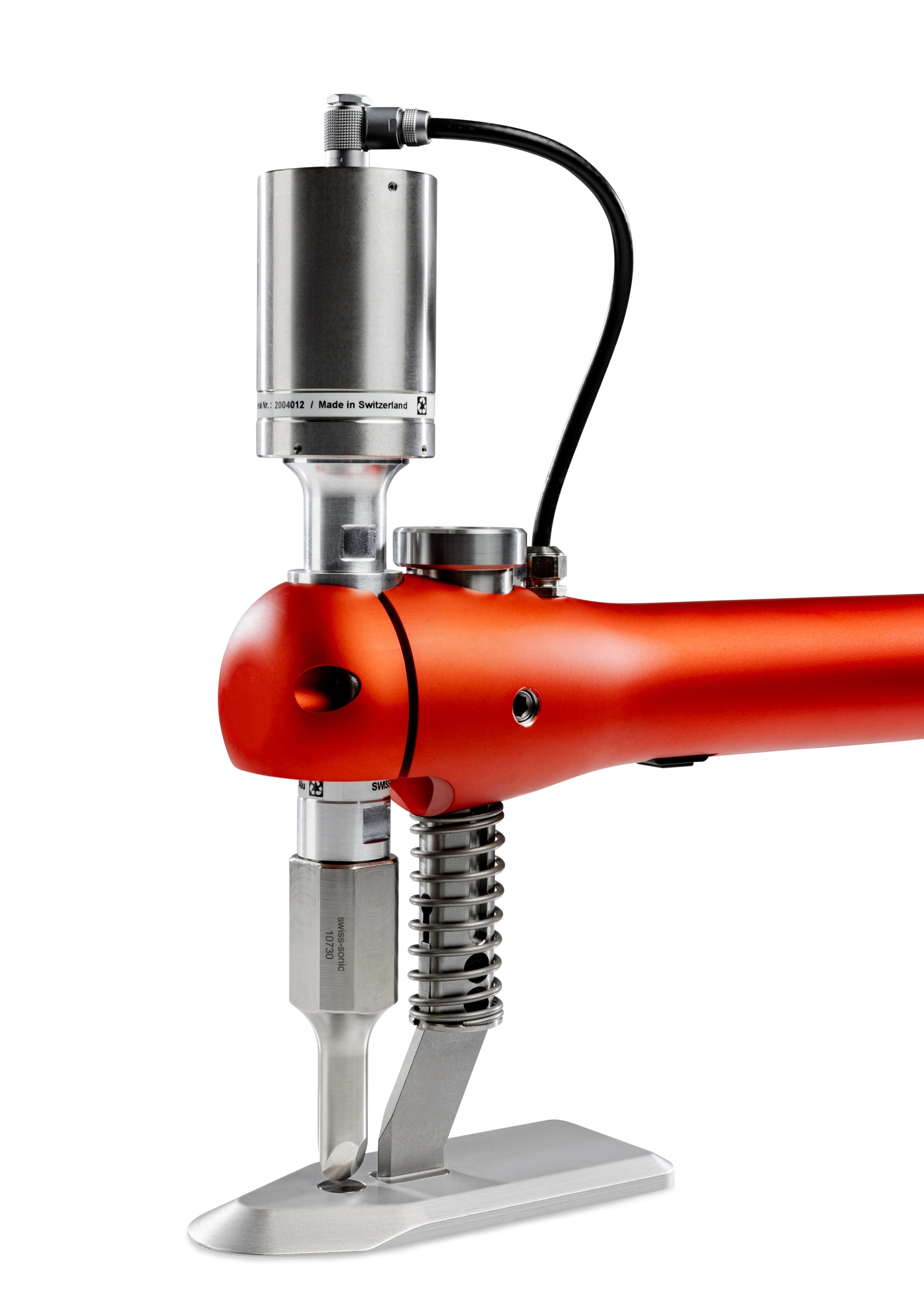
A guided portable tool for cutting and edge-sealing thermoplastic textiles, films and nonwoven materials in one operation.
An ergonomic hand-guided tool for localized welding, riveting and assembly on plastic parts with complex geometry.
A lightweight ultrasonic tool for three-dimensional parts, difficult working angles and selected robotic applications.
Engineering considerations
Portable tools still require the ultrasonic system, tooling, part support and operating method to work together.
Stable application force, ultrasonic settings and cycle timing are needed to maintain consistent welding depth, cut quality and cycle results.
Sonotrode geometry and part support must match the joint, cut line or riveting point so ultrasonic energy is transferred effectively.
Tool weight, grip, trigger position, cable routing and working angle should support comfortable access, repeatable handling and safe activation.
FAQ
ENGINEERING SUPPORT
Discuss your application with our engineering team to determine the most suitable portable ultrasonic tool, sonotrode and system configuration.
Discuss an Ultrasonic Application