POWER • FREQUENCY CONTROL • CONNECTIVITY

Industrial Ultrasonic Generators

Power delivery, resonance tracking and process control for modern ultrasonic welding, cutting and automation systems.

Category overview

The ultrasonic generator is the power and control center of the complete ultrasonic system.

It converts electrical power into controlled high-frequency energy, tracks resonance, manages ultrasonic output and communicates with presses, actuators, hand-held tools or surrounding automation.

Role in the system

How the Generator Influences the Process

The generator supplies ultrasonic energy while managing resonance, process parameters and communication with the surrounding machine.

Frequency Tracking

Continuously follows the resonance of the ultrasonic stack as load, temperature and process conditions change.

Power Delivery

Supplies controlled electrical energy according to the process, horn, material and required amplitude.

Process Control

Manages time, energy, amplitude, trigger conditions and other process-dependent parameters.

Machine Communication

Exchanges signals and process data with PLCs, HMIs, actuators and surrounding automation.

Representative platforms

Typical Generator Configurations

These platforms illustrate common approaches to stand-alone control, integrated process management and multi-system automation.
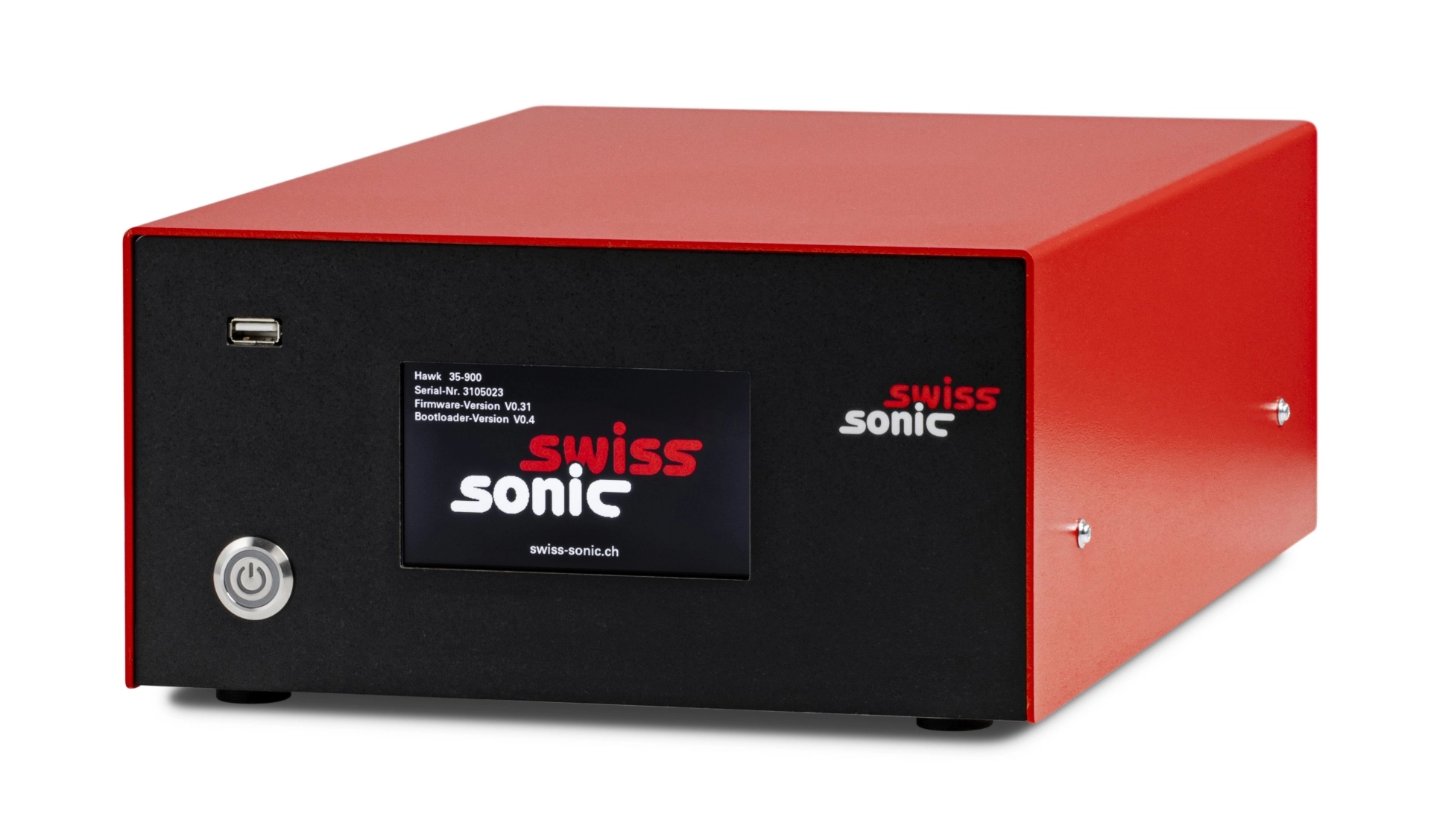
flexible industrial ultrasonic generator platform
FLEXIBLE CONTROL

Flexible Generator Platform

A versatile platform for production equipment, hand-held tools and OEM integration where configurable control and communication are required.

  • Typical frequencies:20 or 35 kHz
  • Use:stand-alone or machine-integrated operation
  • Interface:Ethernet, I/O or HMI options
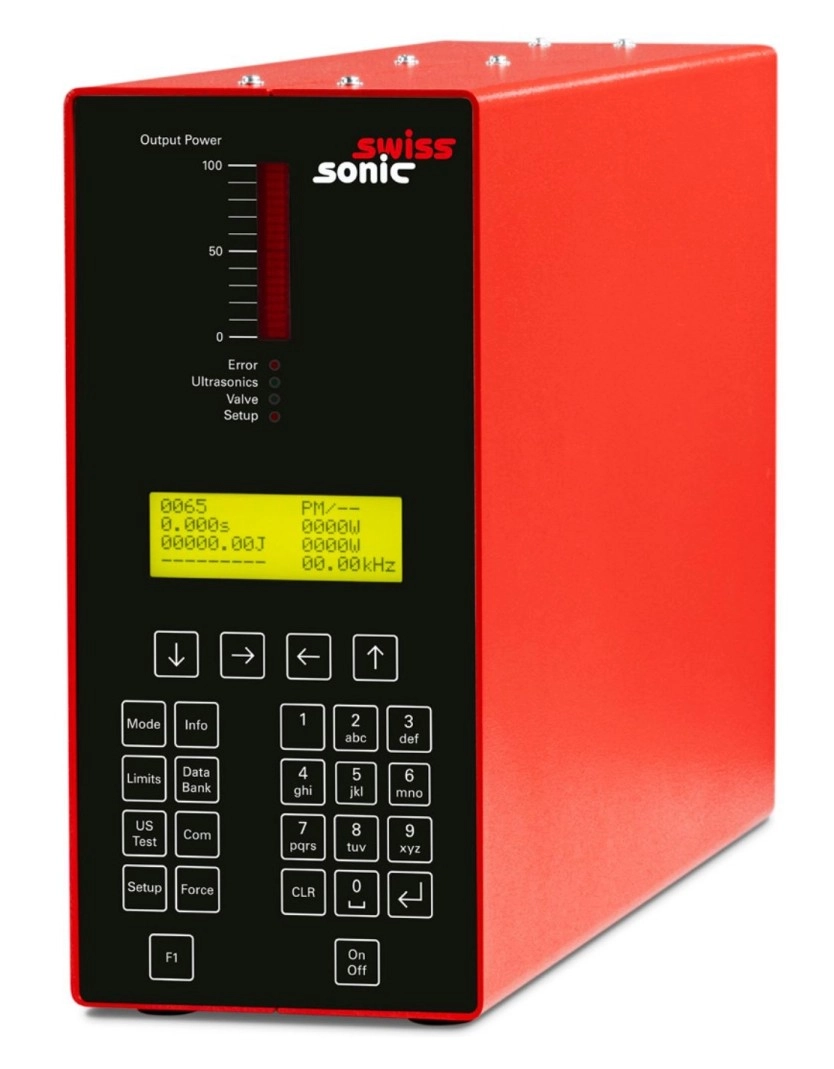
ultrasonic generator with integrated process control
PROCESS CONTROL

Integrated Process Controller

Combines ultrasonic power with cycle control, peripheral I/O and machine communication for press-based or automated production.

  • Control: ultrasonic cycle and peripheral signals
  • Integration: PLC and machine I/O
  • Use: presses and automated systems
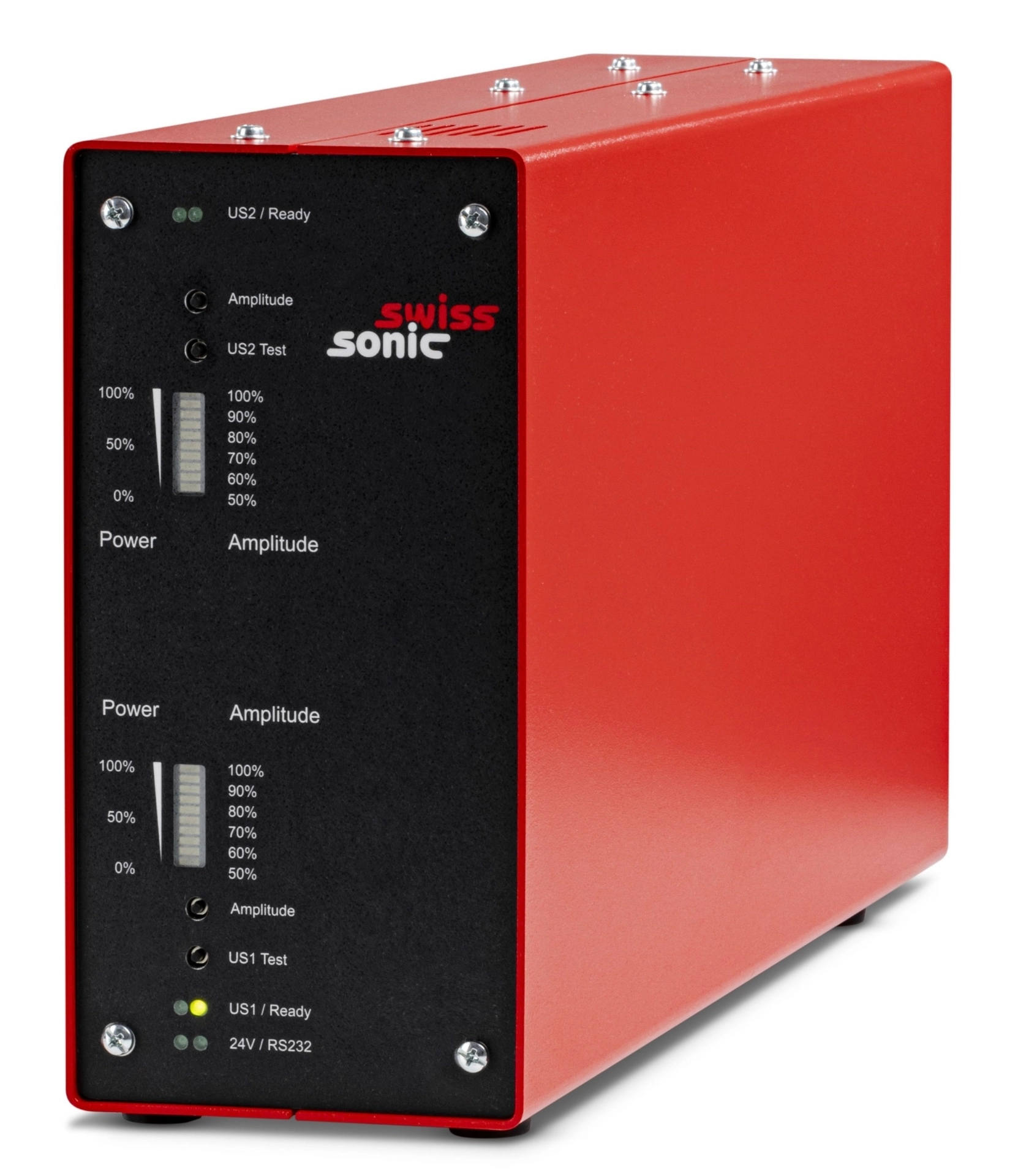
dual-channel ultrasonic generator for automation
MULTI-SYSTEM AUTOMATION

Multi-Channel Generator

A compact solution for machines that operate more than one ultrasonic system under PLC-based sequence control.

  • Channels: multiple ultrasonic systems
  • Control: machine PLC sequence
  • Use: compact multi-head automation

Generator technology

Key Technologies in Modern Ultrasonic Generators

Modern generators combine resonance management, structured process control and industrial communication within the complete ultrasonic system.

Automatic Resonance Tracking

Digital tracking helps the generator follow changes in the stack caused by load, heat and process variation.

Digital Process Control

Time, energy, amplitude and trigger-based control support repeatable processing, while available cycle values assist evaluation and diagnostics.

PLC & Network Connectivity

Industrial communication connects the generator with PLCs, HMIs, production recipes and wider monitoring or traceability systems.

FAQ

Industrial Ultrasonic Generators FAQ

No. The generator must match the frequency, ultrasonic stack, sonotrode, material and process. Excess power does not correct poor tooling, joint design or process settings.

Some generator platforms support multiple ultrasonic channels, while other applications use one generator per stack. The machine sequence, required independence and process timing should be reviewed before selection.

Industrial generators may provide digital I/O, Ethernet or other machine interfaces depending on the configuration. The communication method should be matched to the machine-control architecture.

ENGINEERING SUPPORT

Discuss the Generator and Control Architecture

Let us review how generator control, ultrasonic hardware and machine communication should work together in your application.

Discuss an Ultrasonic Application